
Chainlink: A Deep Dive
Experience the power of Oracles

[NFA: Not a short-term play]
As of January 20, 2025, Chainlink commands a market cap of approximately $15.55 billion. Its current circulating supply is 638.10 million out of a total supply of 1 billion coins. At the time of writing, the Chainlink token (LINK) price is $26.40. The current market capitalization of Chainlink stands at around $15.55 billion, with a fully diluted valuation reaching approximately $20.43 billion.
Chainlink is a decentralized oracle network that serves as a crucial bridge between blockchain technology and real-world data. In today's blog, we are going to discuss the various aspects of Chainlink, including how it operates, its significance in decentralized finance (DeFi), and its diverse use cases across different industries.
Chainlink’s Glorious History
Chainlink's history dates back to 2014 when the non-profit organization SmartContract Ltd. was founded by Sergey Nazarov and Steve Ellis. The project aimed to create a decentralized oracle network that would link blockchain technology with real-world data. In September 2017, Chainlink conducted an Initial Coin Offering (ICO), raising $32 million by selling over 350 million LINK tokens at a price of $0.11 each. This funding allowed Chainlink to develop its decentralized oracle system, which was officially launched in 2019 on the Ethereum blockchain registering significant traction.
During 2019, Chainlink formed strategic partnerships with major companies such as Google, Oracle, and Microsoft, which helped solidify its reputation as a leading oracle solution. The collaboration with Google Cloud to integrate Chainlink's oracle services into Google BigQuery was particularly noteworthy, showcasing the practical applications of its technology. This period also saw Chainlink's growing involvement in the decentralized finance (DeFi) sector, where accurate data feeds became essential for the functioning of various platforms.
As the demand for decentralized oracles surged, Chainlink continued to innovate by introducing new technologies like DECO, which utilizes zero-knowledge proofs for secure data verification without disclosing sensitive information. By 2023, Chainlink had established itself as a dominant player in the oracle market, supporting over 1,000 projects across diverse sectors including finance and gaming. The introduction of the Cross-Chain Interoperability Protocol (CCIP) further enhanced its capabilities, allowing seamless data and token transfers across multiple blockchains.
Chainlink is recognized not only for its technological advancements but also for its critical role in enhancing the reliability and functionality of smart contracts within the blockchain ecosystem. As we move forward into an era increasingly reliant on accurate data and advanced smart contracts, Chainlink's importance is set to grow even further.
Tech@Chainlink
Chainlink is a decentralized oracle network that plays a pivotal role in bridging the gap between blockchain technology and real-world data. By enabling smart contracts to securely access off-chain data feeds, Chainlink addresses the critical "oracle problem," which refers to the challenge of providing reliable external data to smart contracts. Without accurate data inputs, the functionality of smart contracts can be severely compromised, leading to incorrect outcomes.
At its core, Chainlink operates through a network of nodes that retrieve and validate data from various off-chain sources. These nodes are incentivized with LINK tokens, the native cryptocurrency of the Chainlink network, which is used to pay for services rendered by node operators. This decentralized approach ensures that no single entity controls the data being fed into smart contracts, enhancing security and reliability.
One of the key features of Chainlink is its support for hybrid smart contracts, which combine on-chain code with off-chain data infrastructure. This allows developers to create complex applications that can respond to real-world events while maintaining the benefits of blockchain's transparency and immutability. For instance, Chainlink provides decentralized price feeds for cryptocurrencies, enabling DeFi applications to function accurately based on real-time market data.
In addition to price feeds, Chainlink also offers verifiable randomness through its VRF (Verifiable Random Function) service, which is particularly useful for applications requiring secure random number generation, such as gaming and lotteries. This feature ensures that randomness is provably fair and tamper-proof, thus enhancing user trust. Its robust infrastructure allows developers to build feature-rich Web3 applications with seamless access to real-world data and off-chain computation across any blockchain.
Team@Chainlink
Sergey Nazarov, the co-founder and CEO of Chainlink Labs, has been a prominent figure in the blockchain space since its inception. With a background in philosophy and management from New York University, he has dedicated his career to developing decentralized technologies. Under his leadership, Chainlink has grown into an industry-standard oracle solution, enabling over $7 trillion in transaction volume across various sectors.
Steve Ellis, co-founder and CTO of Chainlink Labs complements Nazarov's vision with his extensive technical expertise. Having previously served as CTO at SmartContract, he has played a crucial role in developing the infrastructure that allows smart contracts to access off-chain data securely. His contributions to the technical aspects of Chainlink have been instrumental in its evolution as a reliable Oracle service provider.
The Chainlink team also includes notable figures such as Ari Juels, Chief Scientist at Chainlink Labs, who brings a wealth of knowledge from academia and industry. Juels is a professor at Cornell University and co-director of the Initiative for CryptoCurrencies and Contracts (IC3), focusing on integrating cutting-edge research into practical applications within Chainlink. His work enhances the security and functionality of the oracle network.
Other key team members include Dahlia Malkhi, who specializes in distributed systems, and Lorenz Breidenbach, who leads research and development efforts. Their diverse backgrounds contribute to Chainlink's robust technological framework. In addition to its core team, Chainlink benefits from an advisory board that includes industry luminaries such as Eric Schmidt, former CEO of Google, and Balaji Srinivasan, former CTO of Coinbase. Their guidance helps steer the project towards strategic growth and innovation.
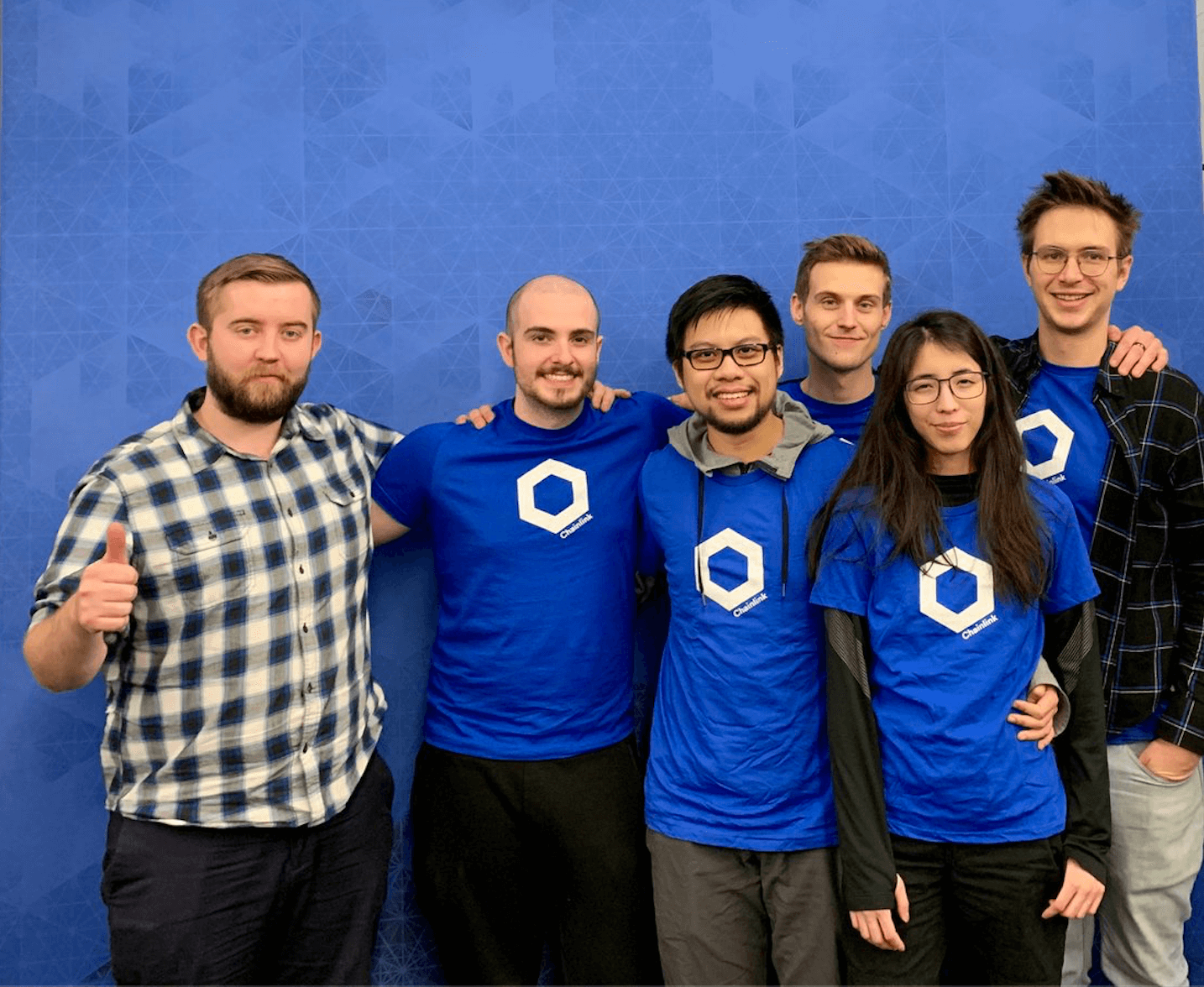
As of January 2025, Chainlink Labs employs over 600 professionals dedicated to pushing the boundaries of decentralized oracles. This growth reflects the increasing demand for reliable data solutions in the blockchain ecosystem. By harnessing the collective knowledge and experience of its talented team, Chainlink continues to lead the way in transforming how smart contracts interact with real-world data.
RWA and Chainlink: A Symbiotic Relationship?
RWAs, which encompass physical assets like real estate, commodities, and financial instruments represented as digital tokens on the blockchain, require reliable data feeds and secure transfer mechanisms to thrive. This is where Chainlink's decentralized oracle network becomes indispensable.
Chainlink provides the essential infrastructure that allows RWAs to be enriched with real-world information, ensuring these digital representations maintain their value and relevance. For instance, Chainlink’s Proof of Reserve service verifies that on-chain assets are fully collateralized by off-chain assets, thereby increasing consumer confidence in tokenized products.
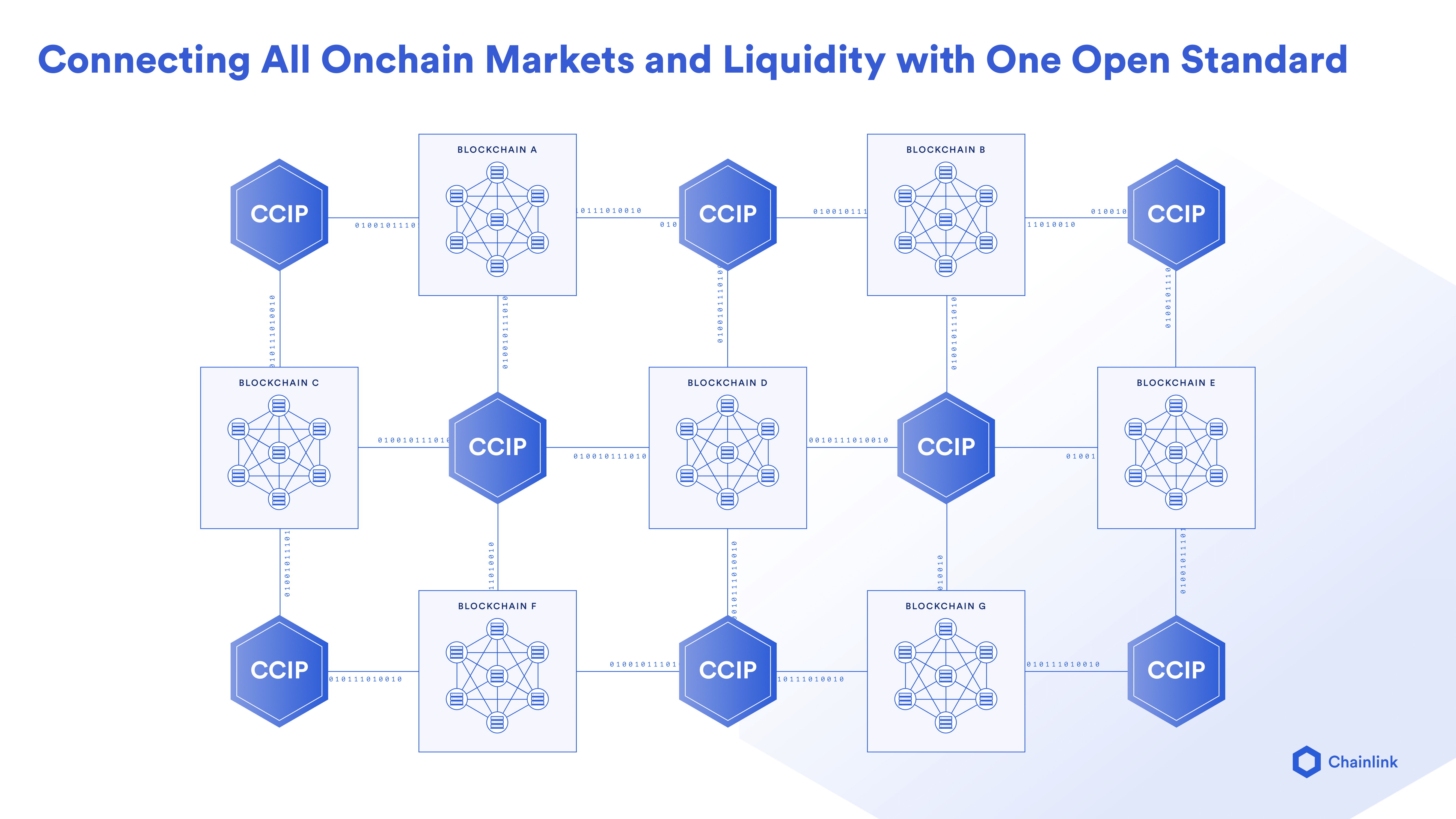
Moreover, Chainlink's Cross-Chain Interoperability Protocol (CCIP) allows RWAs to be seamlessly transferred across different blockchains. This interoperability is vital for the liquidity of tokenized assets, as it eliminates silos that can hinder market efficiency. With CCIP, traditional financial institutions can use their existing infrastructure to transact with private and public blockchains, paving the way for broader adoption of RWAs in the on-chain economy. As institutions like SWIFT and DTCC explore how CCIP can enhance their systems, the potential for RWAs to integrate into mainstream finance grows significantly.
The synergy between RWAs and Chainlink also extends to the adoption of stablecoins. As more financial institutions recognize the benefits of tokenization, they increasingly rely on Chainlink’s services to ensure real-world assets back their stablecoins. This relationship enhances the credibility of stablecoins and drives demand for Chainlink’s Oracle services, creating a mutually beneficial cycle.
For a deeper understanding of RWAs and their potential impact on the financial landscape, refer to my previous article titled "RWA: The Next Big Thing," where I discuss how RWAs are set to revolutionize various sectors through blockchain technology.
Chainlink's extensive network has already enabled over $9.5 trillion in transaction value throughout the Web3 economy, showcasing its pivotal role in supporting RWA adoption. As more projects leverage Chainlink’s capabilities—from data feeds to automation—the potential for RWAs to reshape traditional finance becomes clearer.
Investors and Partnerships
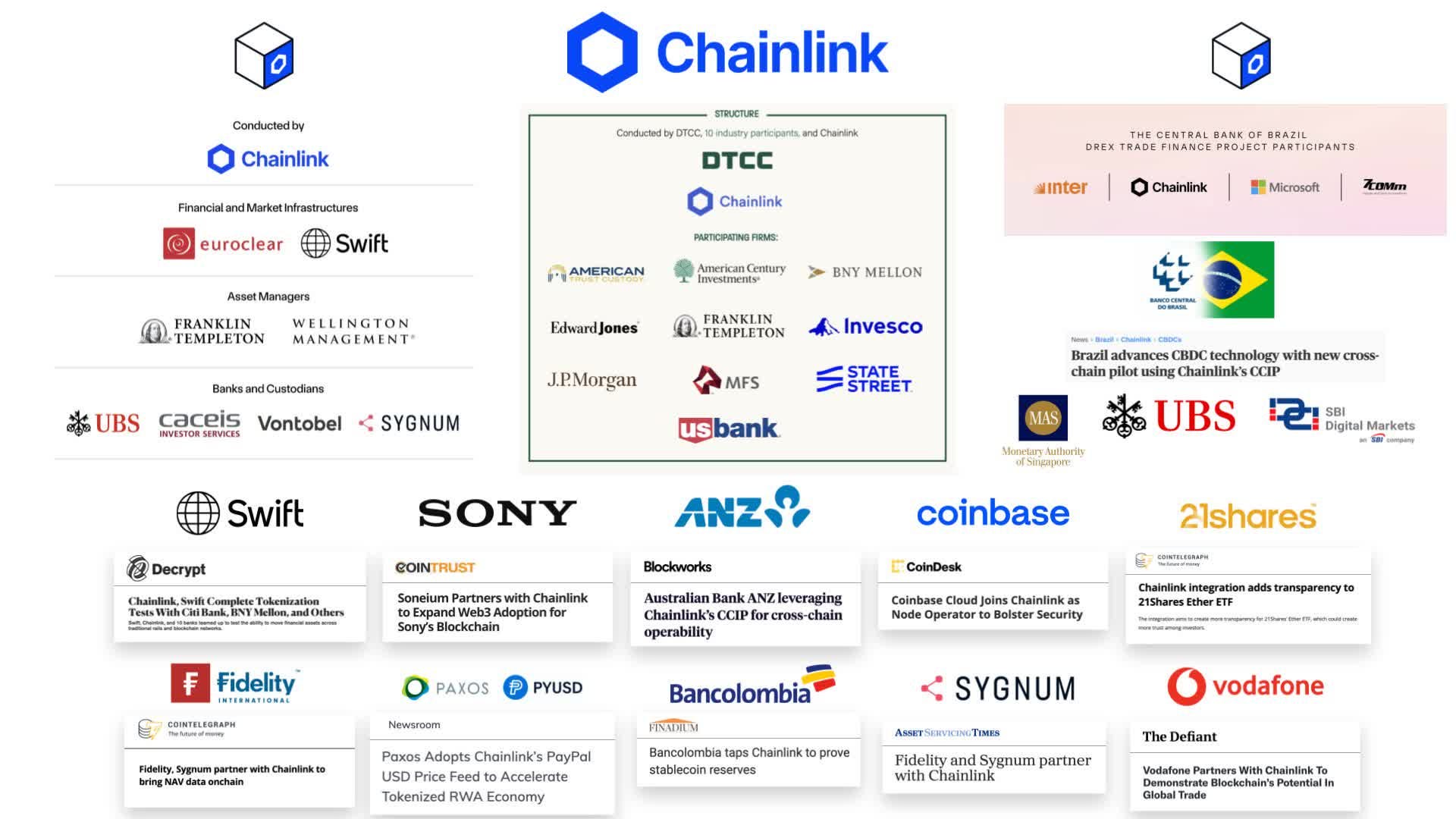
Chainlink has attracted a diverse array of notable investors, enhancing its credibility and market presence. Key backers include Hashed Fund, a prominent venture capital firm focused on blockchain investments, and Framework Ventures, known for its commitment to decentralized finance projects. Other significant investors are Digital Currency Group, Union Square Ventures, and Pantera Capital, all of which have played vital roles in supporting Chainlink's growth. Additionally, Coinbase Ventures has invested in Chainlink, further solidifying its connection to major players in the cryptocurrency ecosystem.
Remarkable partnerships of Chainlink with major corporations:
Google: Chainlink has a noteworthy partnership with Google Cloud, which integrates Chainlink’s oracle services with Google’s cloud infrastructure. This collaboration enhances the ability of developers to build decentralized applications that require real-world data. More details can be found in Chainlink's official blog.
Collaboration with SWIFT and Major Financial Institutions: Chainlink is working alongside SWIFT, Euroclear, and other leading financial institutions to enhance the transfer of tokenized assets across different blockchains. This collaboration involves over 12 world-class financial entities, including Citi, BNY Mellon, and BNP Paribas. The partnership aims to leverage Chainlink's Cross-Chain Interoperability Protocol (CCIP) to facilitate secure and scalable tokenization at scale. This initiative is highlighted in Chainlink's recent announcement from November 7, 2024.
Collaboration with World Liberty Financial: On November 14, 2024, POTUS Donald Trump’s WLFI announced its adoption of the Chainlink standard for on-chain data and cross-chain interoperability. This decision positions Chainlink as a crucial component in WLFI's efforts to enhance security, interoperability, and data reliability within its DeFi ecosystem. The integration will begin with the implementation of Chainlink Price Feeds on the Ethereum mainnet, facilitating the launch of WLFI's Aave v3 instance, pending governance approval.
Partnership with Emirates NBD: Chainlink has joined Emirates NBD's Digital Asset Lab as a council member to foster innovation in digital finance solutions. This partnership will enhance the bank's capabilities in tokenization and digital asset management, reinforcing its position as a leader in financial innovation within the MENAT region. The collaboration was announced during Abu Dhabi Finance Week and further details can be found in the same Chainlink announcement.
Collaboration with Fidelity International and Sygnum: Chainlink has partnered with Fidelity International and Sygnum to bring Net Asset Value (NAV) data on-chain for Fidelity’s $6.9 billion Institutional Liquidity Fund. This landmark collaboration emphasizes transparency and accessibility around key asset data, marking a significant use case for tokenized assets in traditional finance. More information about this partnership can be found here.
Partnership with BTguru: To boost institutional adoption of tokenized securities in Turkey, Chainlink has teamed up with BTguru, a financial transformation services leader. This partnership aims to address challenges in the tokenized asset space by utilizing Chainlink’s advanced infrastructure, including CCIP and Data Feeds. Following this announcement, Chainlink's price surged by 10%, reflecting strong market optimism regarding this collaboration (The Coin Republic).
Current State@Chainlink
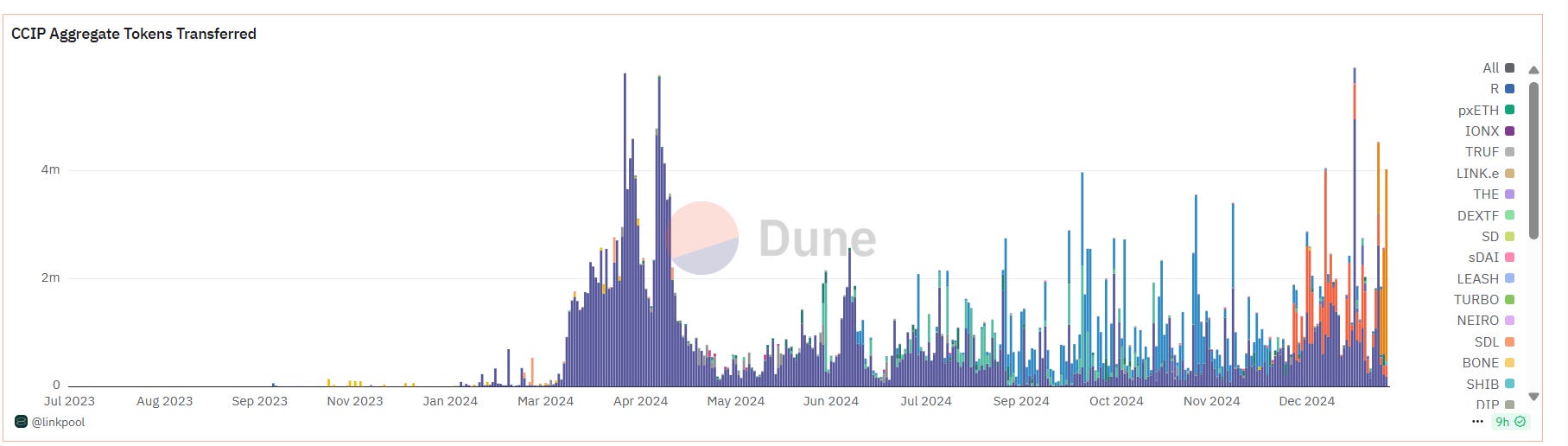
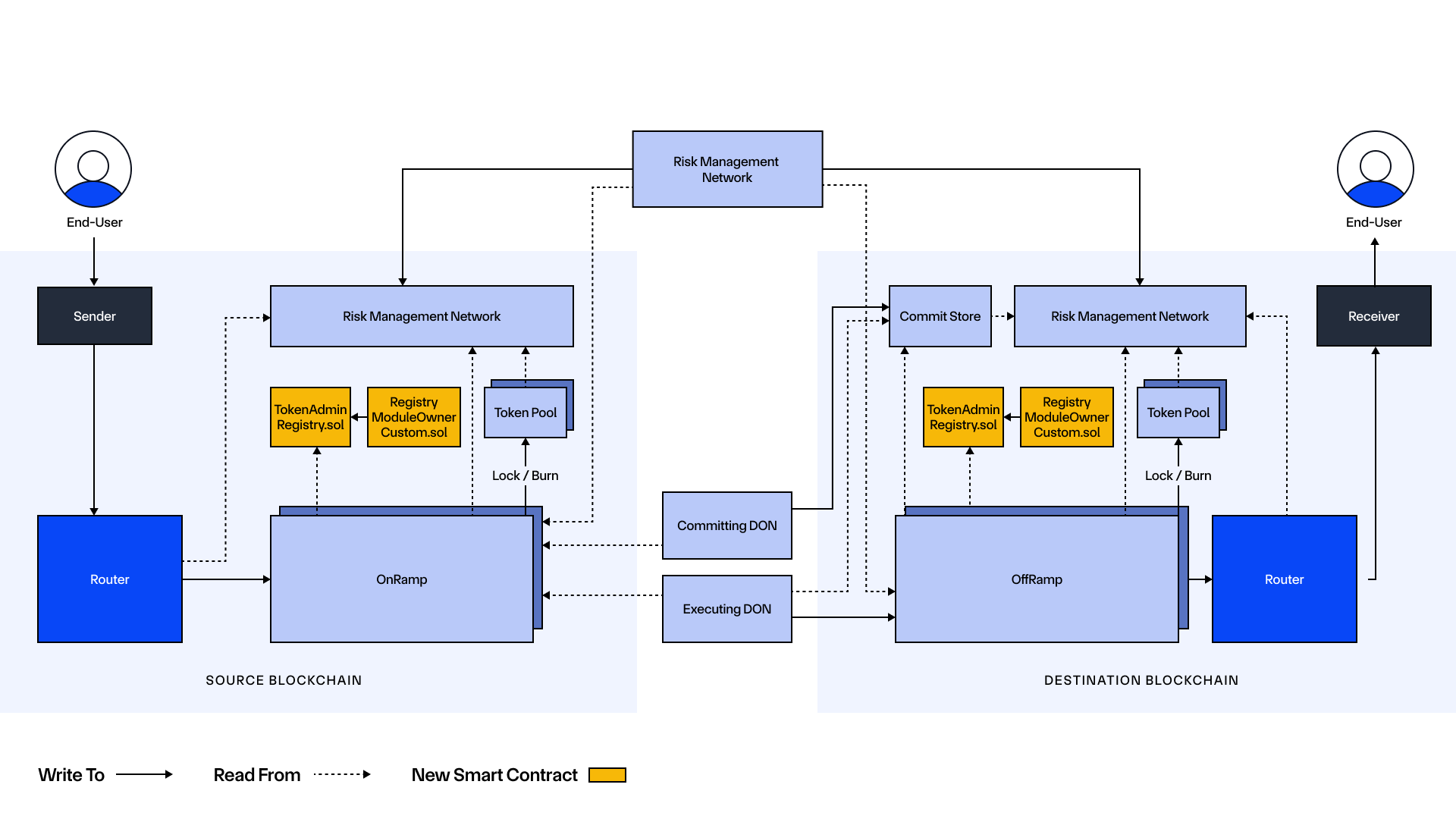
As of January 19, 2025, Chainlink is making significant strides in enhancing its Cross-Chain Interoperability Protocol (CCIP) with the recent launch of CCIP v1.5 on January 15, 2025. This upgrade introduces the Cross-Chain Token (CCT) standard, which allows developers to create and manage tokens across more than 20 blockchains seamlessly. The CCT standard empowers developers to deploy tokens self-serve, enabling full control and ownership without the need for complex coding or CCIP-specific code in their smart contracts.
The CCIP v1.5 upgrade includes a user-friendly Token Manager interface that simplifies the process of launching and managing CCTs. This intuitive tool facilitates no-code-guided deployments, making it accessible even for developers with limited technical expertise. Such enhancements are expected to significantly boost the efficiency and scalability of decentralized finance (DeFi) applications, allowing for faster tokenization processes and zero-slippage transfers.
Additionally, the upgrade features enhanced programmability and security measures, including a Risk Management Network that independently monitors cross-chain transactions for any suspicious activities. This focus on security is crucial as Chainlink aims to maintain its reputation as a reliable oracle network while expanding its cross-chain capabilities.
Future@Chainlink
The recent launch of Cross-Chain Interoperability Protocol (CCIP) v1.5 has positioned Chainlink as a leader in blockchain interoperability, allowing seamless communication and token transfers across more than 20 blockchains. This advancement not only enhances the utility of Chainlink's oracle services but also opens new avenues for decentralized finance (DeFi) applications, enabling developers to create more complex and interconnected ecosystems.
Looking ahead, Chainlink's focus on expanding its real-world asset (RWA) capabilities will be crucial. Chainlink aims to bridge the gap between traditional finance and blockchain technology by enabling the tokenization of physical assets and providing reliable data feeds. This initiative aligns with the increasing demand for transparency and efficiency in financial markets, positioning Chainlink as a leader in this emerging sector.